These two destinations appear in the same planning conversations but they do not deliver the same safari. Wildlife character, scenery, road time, camp atmosphere, and the kind of experiences you bring home all shift significantly with the choice. Understanding what distinguishes them — not just in terms of which animals are present, but in how the safari actually feels — is the foundation for making the right decision.
At a Glance: Two Very Different Kenya Destinations
Masai Mara National Reserve covers 1,510 km2 of open savannah in southwestern Kenya, part of the greater Mara-Serengeti ecosystem. It is Kenya’s most visited safari destination, famous for the Great Migration, large resident lion prides, cheetah, and leopard across a dramatic open landscape.
Ol Pejeta Conservancy covers approximately 365 km2 in Laikipia County in central Kenya, positioned on the equator at the foot of Mount Kenya and the Aberdare Range. It is the largest Black Rhino sanctuary in East Africa and home to the world’s last two northern white rhinos. A private conservancy managed for both wildlife conservation and community development, it has a distinctly different character from the big southern reserves.
Wildlife: What Each Destination Offers
Masai Mara Wildlife
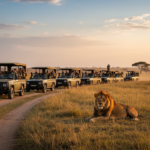
The Masai Mara delivers the highest density safari experience in Kenya. Lion prides are large and well-habituated. Cheetah coalitions use the open plains. Leopards hunt along the river corridors. Large elephant herds, buffalo in the thousands, hippo, and crocodile along the Mara River complete a full predator-prey ecosystem. The Great Migration — more than two million wildebeest and zebra moving through between July and October — is the defining seasonal event that draws visitors from across the world.
Ol Pejeta Wildlife
Black and White Rhino: Ol Pejeta is the premier rhino destination in East Africa. The conservancy holds the highest black rhino density outside South Africa. Rhino sightings here are more reliable than almost anywhere else on the continent. The northern white rhino enclosure allows visitors to observe the world’s last two individuals — Najin and Fatu — a deeply affecting encounter that exists nowhere else on Earth.
The Big Five: Ol Pejeta is one of very few Kenya destinations where you can reliably see all five — lion, leopard, elephant, buffalo, and rhino — in a single safari.
Chimpanzee Sanctuary: Ol Pejeta houses the only chimpanzee sanctuary in Kenya (Sweetwaters Chimpanzee Sanctuary), where rescued East African chimpanzees live in a large protected habitat.
Grevy’s Zebra: Laikipia is one of the strongholds for Grevy’s zebra, the world’s most endangered zebra species, which you will not see in the Mara.
Wildlife Comparison:
| Feature | Masai Mara | Ol Pejeta |
|---|---|---|
| Big Five | Yes (rhino limited in reserve) | Yes, including very reliable rhino |
| Great Migration | Yes, July to October | No |
| Black rhino density | Limited in reserve | Highest in East Africa |
| Northern white rhino | No | Yes, last two in the world |
| Chimpanzees | No | Yes, Sweetwaters Sanctuary |
| Grevy’s zebra | No | Yes |
| Lion and cheetah | Very high density | Good |
| Predator concentration | Very high | High |
Scenery and Atmosphere
The Masai Mara is classic open African savannah: vast rolling grass plains with enormous skies, the Mara River cutting through the landscape, and the Siria Escarpment rising on the western boundary. It is cinematic on the scale that most people imagine when they think of an African safari.
Ol Pejeta sits at around 1,800 metres altitude on the Laikipia Plateau. The scenery is quieter and more intimate — open grassland and acacia woodland beneath the dramatic backdrop of Mount Kenya visible on clear days, the snow-capped Aberdare Range in the distance. The equatorial light is different from the Mara, and the landscape has a contained, well-managed quality that reflects its conservancy character.
Size and Experience Type
The Masai Mara (1,510 km2) is more than four times the size of Ol Pejeta (365 km2). Game drives in the Mara cover large areas of open plains. In Ol Pejeta, the experience is more contained — you can see the full conservancy in two to three days, and the network of well-maintained tracks means efficient access to all areas.
Ol Pejeta feels managed and purposeful. It is a private conservancy with an explicit conservation mission, and this shapes how a visit feels. The ratio of guides to animals is high, the interpretation is outstanding, and the emphasis on education — particularly around the rhino programme — gives the safari a different intellectual texture than the open-ended wildness of the Mara.
The Masai Mara is a national reserve with a broader, more varied tourism sector. It can feel busy at peak season, particularly around high-profile sightings.
Unique Experiences
At Ol Pejeta:
- Northern white rhino encounter: Meeting Najin and Fatu — the last two northern white rhinos alive — is one of the most powerful wildlife experiences available anywhere on Earth. Guided visits to the enclosure run daily
- Chimpanzee visit: The Sweetwaters Chimpanzee Sanctuary guided visit is unique in Kenya, offering something no Mara safari can
- Night game drives: Available at Ol Pejeta (not permitted inside the Masai Mara National Reserve)
- Cycling safaris: Guided cycling in parts of the conservancy, a rare experience in Kenyan wildlife areas
Getting There
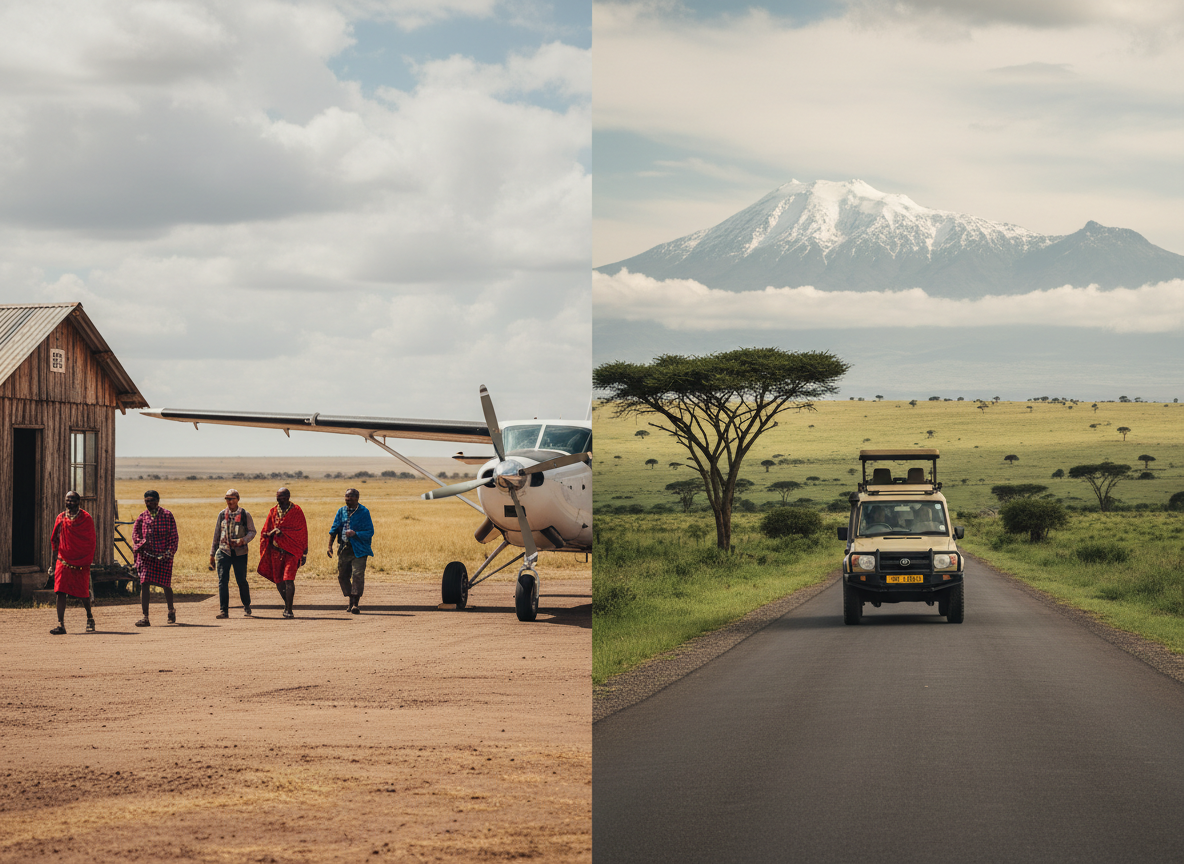
Masai Mara: Approximately 270 km southwest of Nairobi, five to six hours by road, or 45 to 60 minutes by bush flight from Wilson Airport. The flying option is popular for those combining camps or wanting to save the drive time for game drives.
Ol Pejeta: Approximately 240 km north of Nairobi via Nyeri or Nanyuki, roughly three to four hours by road. Nanyuki Airport serves scheduled flights from Nairobi in around 45 minutes. Ol Pejeta also pairs naturally with a Samburu safari to the north or a Mount Kenya visit, making it a strong leg in a central Kenya circuit.
Accommodation
Masai Mara has the widest accommodation range in Kenya, from budget tented camps in the reserve to ultra-luxury private conservancy properties. The choice is broader here than anywhere else in the country.
Ol Pejeta has several well-regarded properties including Sweetwaters Serena Camp, Ol Pejeta Bush Camp, the exclusive-use Ol Pejeta House, and Kicheche Laikipia Camp. The range runs from mid-market to luxury with fewer budget options than the Mara.
Which Should You Choose?
Choose the Masai Mara if:
- The Great Migration and river crossings are a primary goal
- You want the highest predator density in Kenya
- This is your first Kenya safari and you want the full classic experience
- You are travelling July to October and want to align with migration season
- You want the widest possible accommodation choice
Choose Ol Pejeta if:
- Rhino — particularly the northern white rhino encounter — is a meaningful objective
- You want reliable Big Five including the best rhino sightings available in Kenya
- The chimpanzee sanctuary experience is appealing
- You want night game drives or cycling safari
- You are building a central Kenya circuit combining Samburu, Mount Kenya, or the Laikipia Plateau
Consider combining both: Most travellers who visit Ol Pejeta also include the Masai Mara or Samburu in their itinerary. The two destinations complement rather than substitute for each other — Ol Pejeta works well as part of a Nairobi-Mount Kenya-Samburu northern circuit, while the Masai Mara stands as a separate southwestern Kenya experience on a different leg.
Quick Reference Table
| Factor | Masai Mara | Ol Pejeta |
|---|---|---|
| Size | 1,510 km2 | 365 km2 |
| Great Migration | Yes | No |
| Black rhino | Limited | Highest density in East Africa |
| Northern white rhino | No | Yes, last 2 in the world |
| Chimpanzees | No | Yes |
| Night game drives | No, reserve rules | Yes |
| Crowd levels | High at peak season | Low to moderate |
| Accommodation range | Very wide | Mid-range to luxury |
| From Nairobi | Approximately 270 km southwest | Approximately 240 km north |
| Best combined with | Amboseli, Samburu, Tsavo | Samburu, Laikipia, Mount Kenya |
Explorer Notes: Planning a Combined Kenya Safari
A few considerations for travellers who want both destinations:
- Don’t try to do both in under eight days. Each destination needs at least two full game-drive days to deliver on its strengths. Rushing compromises both
- Sequence matters. Many travellers start with Ol Pejeta (shorter drive, acclimatise, northern white rhino encounter) and finish with the Masai Mara for the signature open-plains experience
- Flying between destinations saves time and energy. Wilson Airport handles both directions efficiently, and combining a road transfer one way with a bush flight the other gives you landscape variety at an efficient pace
Where to Go from Here
The Masai Mara and Ol Pejeta answer different questions about what a Kenya safari can be. The Mara answers the classic wildlife abundance question; Ol Pejeta answers the conservation depth question. Knowing which one you are really asking helps you build an itinerary that delivers on what you actually came for.
Every trip described here can be tailored: dates, budget, camps, and pace built around you.
Get a Personalised Safari